

· Max Lowery · Podcast Episode · 7 min read
#115 How Kim Lost 11kg Without Giving Up Holidays, Meals Out or Cake
At 61, Kim had tried almost every diet but could never keep the weight off. Hear how she lost 11kg, reduced emotional eating, and found a calmer, more sustainable approach to weight loss after menopause.
🎧 Prefer to listen on the go? Click on the podcast episode below!
Your current privacy settings prevent us from loading and showing you this embedded podcast.
How Kim Lost 11kg After 60 Without Dieting, Restriction, or Giving Up Her Social Life
What if the reason you keep regaining weight has nothing to do with willpower? For Kim, lasting weight loss only became possible when she stopped chasing another diet and started changing her relationship with food, stress, and herself.
In this episode, Max talks with Kim, a 61-year-old retired nurse who had spent decades trying to lose weight.
Key Takeaways
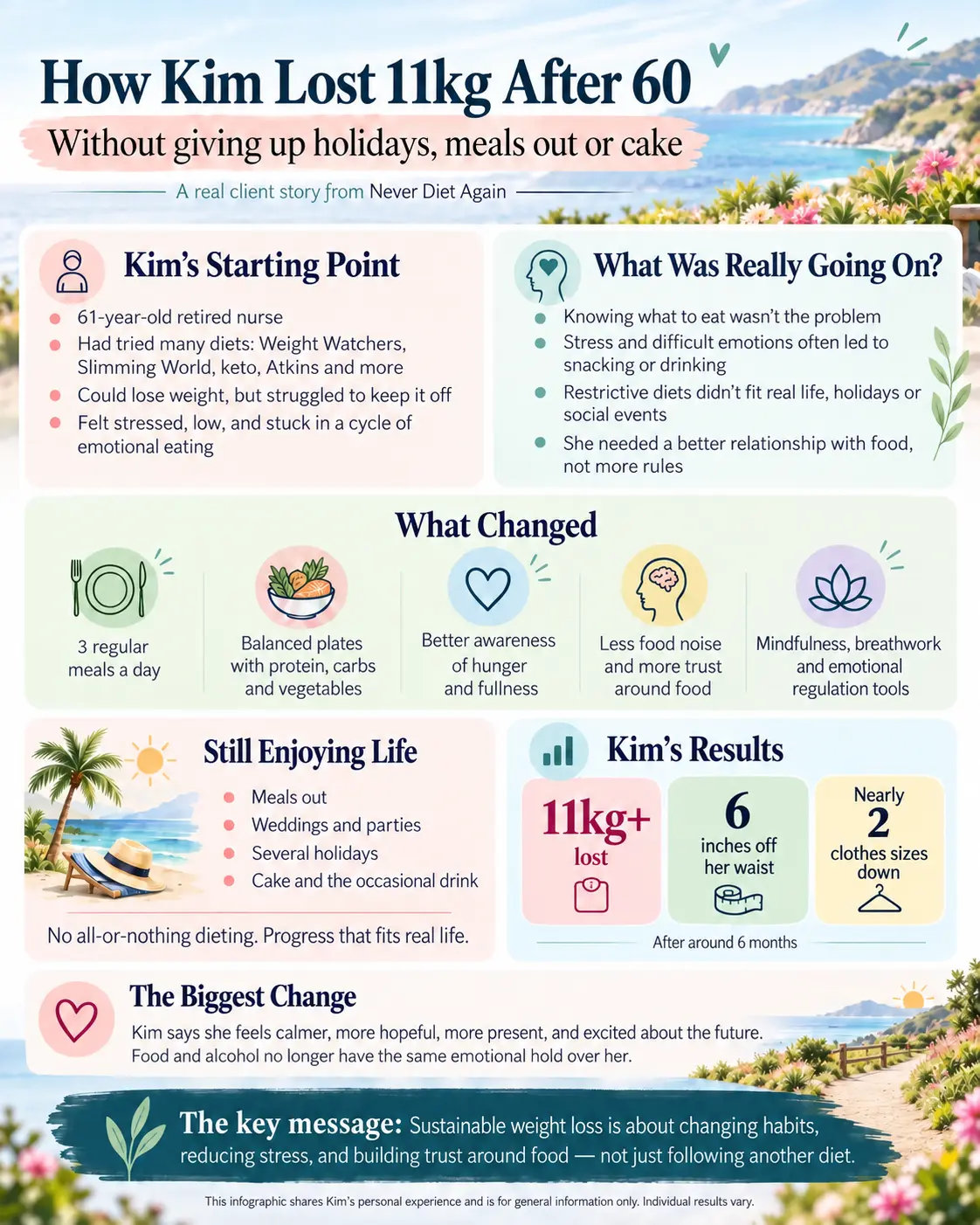
Kim had tried diet after diet. Losing weight was possible. Keeping it off was the problem.
She realised knowing what to eat wasn't enough. Stress and emotional eating were a big part of the picture.
She started eating regular, balanced meals and became more aware of hunger and fullness.
Food and alcohol gradually stopped having the same emotional hold over her.
She learned to enjoy meals out, weddings, holidays and cake without feeling she had ruined her progress.
After around six months, Kim had lost more than 11kg and six inches from her waist, while also feeling calmer and more hopeful about the future.
In this conversation, you’ll hear how Kim learned to:
Recognise emotional eating instead of automatically reaching for food
Handle stressful situations without needing food or alcohol to switch off
Eat regular, balanced meals without obsessing over calories
Notice hunger and fullness signals again
Enjoy meals out, weddings, holidays, and even cake without guilt
Use mindfulness, breathwork, and emotional regulation to respond differently to stress
Trust herself around food instead of relying on rigid diet rules
Why Knowing What to Eat Wasn't the Problem
Weight Watchers. Slimming World. Keto. Atkins. Even the cabbage soup diet.
Kim could lose weight, but keeping it off was another story.
Restrictive diets didn't fit around holidays, family meals, social events, or real life. Eventually, the weight would return, often leaving her believing she simply wasn't disciplined or consistent enough.
By the time she turned 61, Kim says she felt at rock bottom.
She was dealing with post-menopause symptoms, aches and pains, caring for ageing parents, anxiety, low mood, and a growing reliance on food and alcohol to cope with stress.
But Kim already knew a lot about nutrition.
She cooked from scratch and understood healthy eating.
The real change came from addressing what was happening underneath the eating.
What Emotional Eating Looked Like for Kim
One of the most useful parts of the conversation is hearing what emotional eating actually looked like in Kim's everyday life.
It wasn't always an obvious binge.
Kim describes sometimes becoming so busy that she would miss breakfast and lunch, perhaps eating very little until later in the afternoon.
Then the eating could continue through the evening.
Stress was another trigger.
A difficult phone call involving her parents or children could lead to her reaching for food without really thinking about it.
During a particularly stressful period with her parents, alcohol also became part of the routine. A gin and tonic after getting home could be followed by another drink, dinner and more evening snacking.
Kim says she often knew she didn't feel good afterwards, but at the time she didn't have other tools in place to deal with those feelings.
That distinction matters.
The conversation wasn't simply about deciding which foods were "good" or "bad". It was about becoming more aware of why she was reaching for them in the first place.
Max and Kim explore this in much more detail during the full episode.
What Changed Around Food?
Kim describes a very different routine now.
She started eating three regular meals a day.
Rather than becoming obsessed with a rigid meal plan, she focuses on making her meals balanced, including protein, carbohydrates and vegetables.
She also became more aware of what was happening while she ate.
That meant noticing hunger.
Noticing when she was satisfied.
And recognising when the urge to eat was being driven by something other than physical hunger.
In the conversation, Kim talks about becoming much more mindful and aware of her body instead of automatically eating on autopilot.
She also says the constant "food noise" has reduced.
That has made situations such as eating in a restaurant feel very different.
Instead of worrying beforehand about what she is allowed to eat, Kim says she trusts herself to choose something suitable, enjoy it and stop when she feels full.
The wider change was about awareness. Kim became better at recognising emotional eating, noticing hunger and fullness, and dealing with stressful situations without automatically turning to food or alcohol.
She also learned that enjoying cake, meals out or an occasional drink didn't mean she had failed.
Learning to Zoom Out Instead of Starting Again
Another important idea from the episode is what Max describes as zooming out.
One meal is only one meal.
If a meal doesn't go exactly as planned, Kim no longer sees it as proof that everything has gone wrong.
There are still all the other meals that week and month.
This helped her move away from the all-or-nothing thinking that can make holidays, restaurants, birthdays and social events feel like obstacles.
Kim hasn't stopped eating cake.
She hasn't stopped going out for dinner.
And she still occasionally has an alcoholic drink.
The difference is that these choices no longer feel as though they are controlling her.
As Kim puts it during the conversation, there is much more awareness behind the decision.
Could She Still Enjoy Holidays and Meals Out?
Yes.
Kim had several holidays while making these changes. She also attended dinners, parties and weddings.
She says she enjoyed her holidays fully and even lost some weight during some of them.
This is important because her previous diets often felt incompatible with normal life.
If an approach only works when there are no holidays, meals out, family events or stressful weeks, it can be very hard to maintain.
Kim's experience was different.
Rather than trying to make life fit around a diet, she began learning habits that could fit around life.
After around six months, Kim had lost more than 11kg, six inches from her waist, and almost two clothing sizes.
But the biggest change wasn't the number on the scale.
The Bigger Change Was How Kim Felt
Kim says she feels calmer, more hopeful, more present, and excited about the future.
She has also found that alcohol and food no longer have the same emotional hold over her.
Importantly, the stressful situation involving her parents hadn't simply disappeared.
Kim was still helping to care for them.
What changed was how she responded when difficult situations happened.
She describes using greater awareness and tools such as breathwork to give herself time before reacting.
Kim also started looking forward again.
During the podcast, she talks about booking a swimming course, trying floristry and planning bigger walks.
For her, the change became about much more than losing weight.
It was about feeling that there were things to look forward to again.
If you're a woman over 40 or 50 who has tried diet after diet, struggles with emotional eating, menopause weight loss, or constantly feels like you need more willpower, Kim's story may change how you think about the problem.
Listen to Kim's Full Story
Kim's experience shows why sustainable weight loss may involve looking beyond another set of food rules.
Sometimes it is also worth looking at the habits, emotions and situations that influence when and why you eat.
The podcast goes much deeper into Kim's relationship with food, the pressures she was dealing with, the changes she made and what she would say to somebody who believes they have already tried everything.
Listen to the full episode now and discover why sustainable weight loss may start with addressing the reasons you eat—not simply finding another diet to follow.
If you enjoyed this podcast, check out these three episodes next:
“I Thought You Were a Scam, Now I’m Down 2 Stone” – Rhian
https://www.neverdietagain.uk/blog/-101-i-thought-you-were-a-scam-now-i-m-down-2-stone-rhian
Victoria Lost 30lbs, But That’s Not What Changed Her Life…
https://www.neverdietagain.uk/blog/-111-victoria-lost-30lbs-but-that-s-not-what-changed-her-life-
From Yo-Yo Dieting for 30 Years… To Losing 22kg Without Dieting
https://www.neverdietagain.uk/blog/-106-from-yo-yo-dieting-for-30-years-to-losing-22kg-without-dieting
Follow me on Instagram: https://www.instagram.com/max.lowery/
Book a Food Freedom Breakthrough Call: https://www.neverdietagainmethod.uk/call-ig
Watch my The Cravings & Fat-Burning Masterclass: https://www.neverdietagainmethod.uk/register-podcast